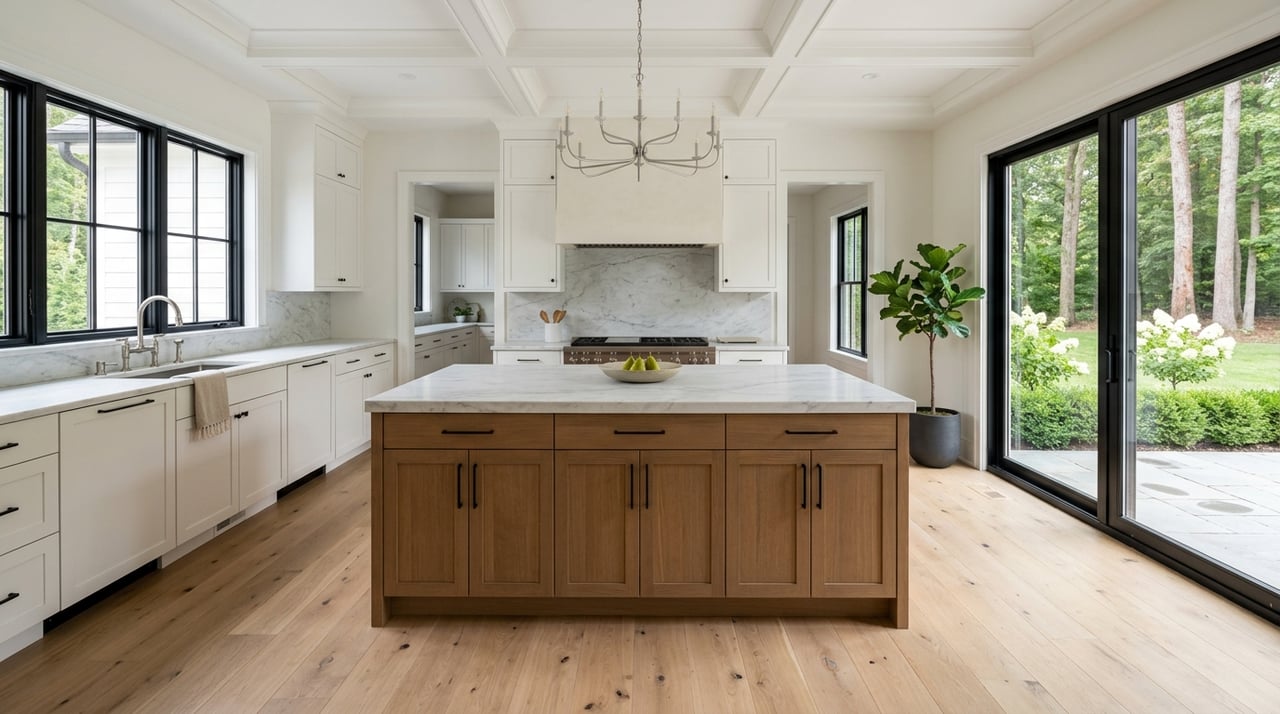
Birmingham vs Bloomfield Hills Homes for Your Next Move
Trying to choose between Birmingham and Bloomfield Hills for your next move? It is a common decision for buyers in Oakland County because both cities offer strong appeal, but they deliver very different day-to-day experiences. If you are weighing walkability, privacy, lot size, or long-term fit, this guide will help you compare the two with more clarity. Let’s dive in.
At the highest level, Birmingham is the more compact, downtown-centered option. The 2020 Census counted 21,813 residents on 4.79 square miles of land, which works out to about 4,551 people per square mile. Its downtown district describes the area as pedestrian-friendly, with nearly 300 retailers, restaurants, theaters, and a central park along Woodward Avenue.
Bloomfield Hills offers a very different setting. The 2020 Census counted 4,460 residents, with about 5.0 square miles of land, and the city’s master plan describes it as a built-out, low-density residential community. You will generally find a quieter setting, larger lots, tree-lined streets, and a more limited business area centered near Woodward and Long Lake.
For many buyers, that core difference shapes everything else. If you want more activity and easier access to shops and dining, Birmingham often feels like the stronger fit. If you want more space, privacy, and a calmer residential atmosphere, Bloomfield Hills often stands out.
Birmingham’s biggest lifestyle draw is its downtown. According to the official downtown district, the area includes nearly 300 merchants, plus restaurants, gift shops, salons, art galleries, movie theaters, and a central park. The district also promotes year-round events such as concerts, festivals, markets, and outdoor movies.
That translates into a more convenient daily rhythm for many homeowners. You may be able to handle errands, dining, or weekend plans with a shorter drive and, in some areas, on foot. If your ideal lifestyle includes spontaneous coffee runs, dinner out, or time in a lively center city environment, Birmingham offers that more clearly.
This setting can also appeal to buyers who want a home base that feels connected to activity. Instead of a purely residential experience, Birmingham often gives you a stronger sense of being close to where things happen. For some buyers, that energy is a major quality-of-life factor.
Bloomfield Hills is designed around a more residential experience. The city’s resident welcome materials describe it as primarily residential, with limited commercial development, while still being near shopping, dining, and cultural attractions. In other words, convenience is still available, but it is not built around a traditional downtown retail core.
The city also identifies Cranbrook Educational Community as a major local anchor, which reinforces its cultural identity. Rather than a busy center packed with storefronts, Bloomfield Hills tends to feel more quiet, established, and removed from day-to-day commercial traffic. That difference matters if you value a peaceful home environment.
For many buyers, Bloomfield Hills works best as a retreat. You are often choosing it for the residential setting itself, not for a walk-to-dinner lifestyle. If privacy and space matter more to you than being close to a busy downtown, this can be a strong match.
Birmingham offers more variety in lot patterns and housing context. The city’s single-family districts have minimum lot areas of 20,000, 9,000, 6,000, and 4,500 square feet, but the city also notes that those minimums do not apply to single-family homes on originally platted lots. That helps explain why the housing stock can include a mix of smaller legacy lots alongside larger parcels.
For buyers, this creates more range in what you may find. Some homes are renovated older properties in established in-town locations, while others may raise questions around tear-down potential, rebuilding, or lot configuration. If you are considering a major renovation or new build path in Birmingham, parcel-by-parcel review is important.
This mix can be a plus if you want options. You may find homes that offer a more manageable footprint, a premium location near downtown, or a chance to reimagine a property over time. The tradeoff is that lot and zoning details often matter more here.
Birmingham usually makes sense for buyers who want convenience and potentially lower exterior maintenance than a larger estate-style property. The city’s walkable downtown, smaller lot pattern, and mixed housing context can support a simpler daily routine. If your goal is to stay active without taking care of a large property, Birmingham often deserves a close look.
Bloomfield Hills leans the other direction. The city’s master plan says lot sizes range from three-quarters of an acre to more than two acres, and the area south of Lone Pine Road is predominantly made up of minimum one-acre lots. The same plan also notes that multiple-family housing is concentrated along Woodward Avenue and Long Lake Road.
That larger-lot pattern shapes the feel of the market. Homes often come with bigger setbacks, more landscaping, and a stronger custom-home character. If you picture a property with more separation from neighbors and a quieter visual setting, Bloomfield Hills is more likely to align with that vision.
The city’s planning documents also note that attached units can appeal to empty-nesters because of lower maintenance needs. That means Bloomfield Hills is not only about large estate properties. It can also work for buyers who want to scale back upkeep while still keeping a more private and residential setting.
If you are thinking beyond current inventory, Bloomfield Hills can be especially attractive for buyers drawn to land, setbacks, and a custom-home feel. The city places emphasis on preserving wooded corridors, larger setbacks, and low-density residential character. For buyers exploring a lot purchase, tear-down, or custom build, that setting can support a very different end result than a more compact in-town parcel.
This may be the simplest way to narrow your decision. Birmingham tends to support more walkability, shorter errand runs, and a stronger downtown experience. Bloomfield Hills tends to reward buyers who prefer a quieter home base and do not mind driving to most retail and dining destinations.
Neither approach is better for everyone. It depends on how you actually want to live once the move is over. If your ideal week includes being out and about with easy access to a central district, Birmingham may feel more natural. If your ideal week starts with a calm residential setting and more room around you, Bloomfield Hills may feel more comfortable.
School district boundaries and programming matter for many buyers, but they should be reviewed carefully at the property level. Birmingham Public Schools says it serves more than 7,500 students across 15 school locations and emphasizes character education. Bloomfield Hills Schools highlights International Baccalaureate programming and experiential learning.
The main takeaway is that the two areas reflect different market contexts as well as different district identities. Birmingham is often tied to buyers who want a more in-town lifestyle. Bloomfield Hills often draws buyers who prioritize space, privacy, and a lower-density setting.
If schools are a major part of your move, it helps to compare both the home and the exact district details for the addresses you are considering. That keeps your search focused on fit rather than assumptions.
Both cities can be relevant if you are exploring a tear-down, vacant lot, or custom-home opportunity. Birmingham’s legacy plats and active zoning work make lot review especially important. The city is currently updating its zoning ordinance to modernize standards and align with Birmingham Plan 2040.
That means a property that looks promising on first glance may need deeper review before you make plans. Lot dimensions, original plat status, setbacks, and current zoning context can all shape what is realistic. Buyers considering a build path in Birmingham benefit from careful due diligence early.
Bloomfield Hills has its own planning priorities. The city places more emphasis on preserving wooded corridors, larger setbacks, and low-density residential character. If your goal is to create a custom home with a more estate-like setting, that framework can be part of the appeal.
For buyers pursuing a custom build, this is where local guidance matters most. A strong search is not only about what is listed today. It is also about understanding which parcels fit your goals and which opportunities make sense before you commit.
Birmingham is usually the better match when your priorities include walkability, downtown energy, and a wider range of smaller-lot or attached-housing options. It often suits downsizers, in-town buyers, and homeowners who want a more connected daily routine. If convenience and activity are high on your list, Birmingham is often the clearer answer.
Bloomfield Hills is usually the better match when your priorities include land, privacy, and a quieter residential setting. It often suits buyers looking for estate-scale living, larger setbacks, or a stronger custom-home feel. If you want your home to feel like a retreat, Bloomfield Hills may be the better fit.
The right move comes down to how you want to live, not just where you want to buy. If you want help comparing homes, lots, resale opportunities, or custom-build options in either market, connect with Saba Katto for personalized guidance.
Who you work with matters! When it comes to your real estate needs, you should work with the best. Whether it is buying, selling, renting, second homes, investing, or more, we are happy to help assist you in any way that we can.
775 INDUSTRIAL CT BLOOMFIELD HILLS, MI 48302