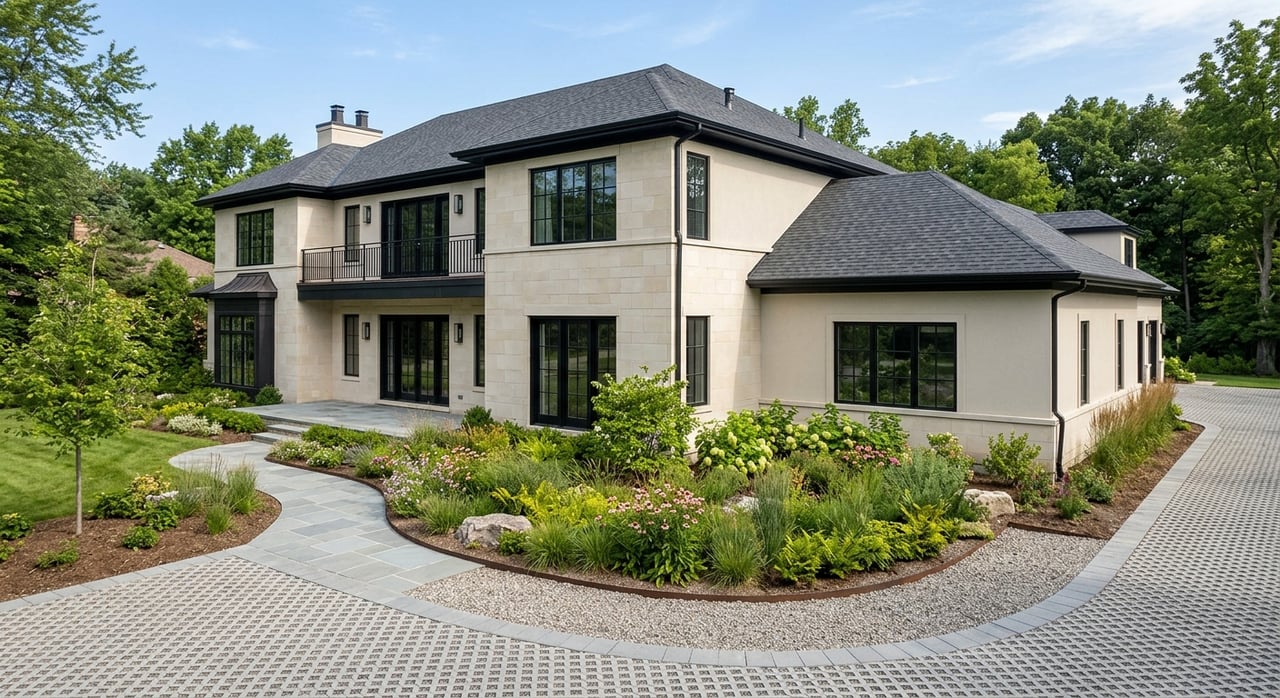
From Land To Luxury Home In Oakland Township
Finding the perfect luxury home in Oakland Township is not always about waiting for the right listing to appear. Sometimes the better move is starting with the right piece of land and building around your vision. If you are considering that path, you need more than inspiration. You need a clear plan for land selection, buildability, permits, and long-term resale. Let’s dive in.
Oakland Township offers a setting that feels distinct from many nearby communities. The township describes itself as less densely populated, rural, and wooded in character, with planning that limits commercial and industrial development while maintaining low density.
For you, that often means more privacy, larger lots, and a stronger estate feel. It also means a land purchase here requires careful planning, because what you can build depends on more than acreage alone.
When you shop for land in Oakland Township, it helps to shift your mindset from “How big is the parcel?” to “How buildable is the parcel?” A large lot can still come with limits tied to access, shape, drainage, utility availability, or environmental constraints.
The township’s zoning ordinance includes several residential density districts, from very low density to medium-high density. Larger-lot standards can become more restrictive when public sewer is not available, so the same acreage may offer different possibilities depending on infrastructure.
A luxury land-to-home project starts long before house plans are drawn. Your first step should be confirming the legal and physical realities of the parcel.
The Oakland County Register of Deeds maintains the public record for land documents in Oakland County. That includes deeds, mortgages, easements, and related recorded instruments tied to a property.
Reviewing those records can help you confirm ownership, legal description, and whether any recorded easements or restrictions could affect your plans. This is one of the first places where early diligence can save you time and money later.
Oakland Township requires every building to sit on a lot with access to a public street or an approved private road. That means legal access is not optional. It is a core part of whether a parcel is truly usable for a new luxury home.
If a parcel fronts an Oakland County road, you will also need a residential driveway permit from the Road Commission for Oakland County. Driveway standards can affect width and grade, so the entrance to the property should be treated as part of the home design, not an afterthought.
Lot geometry matters more than many buyers expect. The township ordinance says lots generally should not exceed a 1:4 width-to-depth ratio unless they are more than 10 acres.
That means narrow or unusually shaped lots may be harder to design well. Even if they technically qualify, they can create challenges for home placement, driveway layout, outdoor living, and future resale appeal.
Utilities can significantly shape your budget and your building options. In Oakland Township, you should verify service availability early rather than assuming a parcel will support the exact home you want.
Oakland Township states that water services are not managed by the township. The Oakland County Water Resources Commissioner operates seven township water systems, and those systems are groundwater-based.
If a parcel is not connected to a public system, you may need private well and onsite sewage approvals instead. That changes both your timeline and your planning process.
The Oakland County Health Division handles private well permits and onsite sewage permits. For vacant land, the county lists a new well permit for private and Type III wells, and a new onsite sewage disposal permit for residential septic systems.
The county also notes that private wells are not routinely tested by the county. As the owner, you are responsible for testing, and annual sampling for bacteria, nitrate, and nitrite is recommended.
It is smart to include permit costs in your early land-to-home budget. Oakland County lists a $260 fee for a new well permit for private or vacant-land wells and a $325 fee for a new residential septic permit on vacant land.
Those are only part of the picture, but they help illustrate why utility planning should happen before you finalize a land purchase. A great parcel on paper can become much more complex if utility solutions are limited.
Oakland Township’s natural character is part of its appeal, but it also means environmental review matters. Wooded settings, wetlands, grades, and water features can all affect where and how you build.
The township requires a grading plan for principal and accessory structures. That plan must be prepared by a registered engineer or landscape architect and reviewed by the township engineer and or environmental consultant before a zoning permit is issued.
For custom-home buyers, this is an important reminder that the site itself is part of the project. The home design, drainage, and land contours need to work together from the beginning.
Oakland Township requires a 25-foot setback from wetlands and watercourses. Its residential site-plan guide also adds a 100-foot setback from free-flowing lakes or streams for structures and septic fields.
If the site includes regulated wetlands, inland lakes, or streams, permits from Michigan EGLE may be required before construction or disturbance. Activities like filling, dredging, or constructing buildings in wetlands can trigger that review.
It can be tempting to start clearing trees or preparing the site right after closing. In Oakland Township, that can create problems if zoning compliance approvals are still pending.
The township restricts land-disturbance activity done in preparation for a use or structure that still needs zoning compliance approval. In other words, site work should follow a clear approval strategy, not lead it.
This is one of the most common questions luxury buyers ask, and the answer depends on zoning and utility availability. In Oakland Township, lot size alone does not tell the full story.
In the VLRD district, the minimum lot area is 100,000 square feet without sewer or 75,000 square feet with sewer. Minimum width is 200 feet without sewer or 150 feet with sewer.
In the LRD district, the minimum lot area is 60,000 square feet and 150 feet of width without sewer, or 45,000 square feet and 130 feet of width with sewer. These standards show why two parcels that look similar online may offer very different building opportunities.
Once you have the right parcel, the next phase is coordinating design, permits, and construction. This is where a broker with luxury land and builder experience can help you avoid common missteps.
The Oakland Township Building Department enforces Michigan building, residential, plumbing, electrical, mechanical, and energy codes. Township forms show that separate plumbing, mechanical, and electrical permit applications are required.
The township’s new-home permit application asks for details such as parcel ID, zoning, lot information, architect or engineer, contractor, and whether the project will use public or private water and sewer, septic, or a private well. Plans must be submitted before permit issuance unless the work is only a minor repair or alteration.
In Michigan, a person building a residential structure for compensation must be licensed as a residential builder. The Michigan Attorney General advises homeowners to verify the license and make sure the written contract requires the builder to obtain all required permits.
That is especially important on a luxury custom build, where the home, site, and approvals all need to move in sync. A strong team can keep the process organized from lot evaluation to final execution.
Oakland Township’s January 5, 2026 fee schedule lists a $500 application deposit for new residential buildings and a $1,000 bond for a new residential single-family dwelling. Permit fees are also tied to valuation and square footage.
These costs should be part of your planning from the start. When you understand the full approval path early, it becomes easier to compare land opportunities realistically.
Even if you plan to stay long term, resale should still shape your decisions. In Oakland Township, the most marketable luxury homes are often the ones that feel tailored to the land rather than forced onto it.
The township’s rural, wooded, large-lot character tends to support homes that respect trees, grades, privacy, and a natural sense of arrival. A thoughtful driveway approach, careful site placement, and strong curb appeal can matter more than simply maximizing square footage.
School district alignment may also affect resale interest. Oakland Township states that it is served by Rochester Community Schools, Lake Orion Community Schools, and Romeo Community Schools.
Market pace is another useful signal. Realtor.com described Oakland Township as a hot market in May 2026, with homes selling in a median of 24 days and at about list price on average. That does not guarantee future results, but it does suggest that well-positioned homes may stand out when they are thoughtfully planned.
A land-to-luxury-home project has more moving parts than a standard home purchase. You are not just evaluating finishes and floor plans. You are evaluating zoning, access, grading, utilities, permits, and long-term fit.
That is why early strategy matters so much in Oakland Township. The right parcel can become an exceptional custom home, but only if the land, design, and approval path all work together.
If your ideal home is not currently on the market, building it may be the smartest path forward. For help evaluating Oakland Township lots, custom-home opportunities, and luxury resale options, connect with Saba Katto for experienced, broker-led guidance tailored to your goals.
Who you work with matters! When it comes to your real estate needs, you should work with the best. Whether it is buying, selling, renting, second homes, investing, or more, we are happy to help assist you in any way that we can.
775 INDUSTRIAL CT BLOOMFIELD HILLS, MI 48302